


How does Honda TPMS work?
Modern vehicles use sophisticated technology in almost every aspect, and your Honda is no exception. Late-model Honda vehicles come with technology, such as head-up displays, touch-screen infotainment systems, and tire pressure monitoring systems (TPMSs). Not all TPMSs were created equal, yet all play an important role in vehicle safety. To help you understand how TPMS works and how to troubleshoot the system, we had our technology experts explain.
What Is Honda’s TPMS?
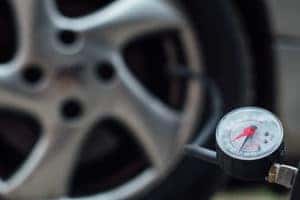
Close-up of air pump pressure gauge and a car tire in the blurry background by Ivan Radic is licensed with CC BY 2.0
Honda engineered your TPMS to measure your tires’ air pressure and alert you to unsafe levels. These alerts have changed over the years. Older models have a simple dashboard warning light. This light resembles a horseshoe and has an exclamation point inside.
As technology has evolved, so too have the warnings. For example, some newer vehicles provide a digital Tire Pressure Low warning on your driver information screen. This warning might include the actual air pressure and the tire affected in specific models. The newest Honda vehicles will include alerts throughout this system and the HondaLink system, a free app you can download that helps monitor vehicle health.
Before TPMS technology, the only way to monitor your tire pressure was to use a handheld gauge. Of course, you can and should inspect your tires before driving, but a visual inspection can’t tell you a tire’s air pressure and can be misleading. For instance, a tire with a maximum 55 PSI rating could appear properly inflated while only containing 40 PSI. Therefore, you may not notice that your tire needs air.
Fortunately, since 2007, the government has required all new vehicles to install some form of TPMS. However, not every TPMS works the same. For example, the illumination of a dashboard warning light signals your TPMS detected a problem. Depending on the type of TPMS you have, this could mean different issues. Manufacturers use one of two systems: indirect and direct TPMS.
Indirect TPMS
Indirect TPMS uses data from your antilock braking system sensors that monitor wheel speed. These sensors calculate the rate of revolution for each wheel, and your onboard computer interprets that data to determine the size of each tire. If a wheel starts spinning faster than anticipated, the computer determines the tire has too little air and activates the alert. So, indirect TPMS doesn’t monitor the air pressure at all.
The advantages of indirect TPMS include low initial cost, fewer programming issues, and less maintenance required over the years. However, you do have a few disadvantages with indirect TPMS. First, using a larger or smaller tire affects the system’s accuracy leading to false or late warnings. Unevenly worn tires also impact accuracy. In addition, every time you inflate or rotate your tires, you have to reset the system.
Direct TPMS
In this system, you have sensors that monitor the air pressure in each tire, not wheel speed. Some models even provide temperature readings from inside the tires. Usually, the readings transmit wirelessly to a central control module, which then alerts you via a dashboard warning light. You may also receive messages on your information screen if the air pressure or temperature readings fall outside acceptable parameters. In addition, since each sensor has a unique serial number, your control module can differentiate between your tires and all the other tires with sensors on the roads.
These sensors have proprietary technology that manufacturers control. Therefore, if you need a TPMS sensor replaced, you want an experienced technician to perform the work. At Nucar Honda of Westford, our technicians have the knowledge and expertise to handle all your TPMS issues.
The main advantage of a direct TPMS system is you get actual air pressure data from each tire. In addition, these sensors remain accurate after replacing or rotating your tires with a simple resynchronization. The batteries in this wireless system usually last 10 years or longer.
Direct TPMS costs much more to install, making this an expensive option. Another drawback is the need for specialized training and equipment to reset or repair system parts. Additionally, even though the battery lasts 10 years, you can’t replace just the battery. Instead, you must replace the entire sensor, making this a more expensive maintenance part. Other repair shops don’t always have the experience necessary to make these repairs easy, so we recommend you bring your Honda to us for service on your TPMS. Lastly, careless technicians can damage these sensors when taking off or putting on tires.
Which System Is the Safest?
While each method provides you with alerts when they detect potential problems, at Nucar Honda of Westford, we don’t recommend relying solely on your TPMS to tell you when your tire air pressure gets low. Instead, you should routinely check your air pressure with a manual pressure gauge. Gauges cost less than $10, and you can keep them in your glove box or center console for easy access. We suggest checking the air pressure in your tires every month. You can do this while you refuel, and if you need air, you’re already at a filling station with an air pump.
How To Calibrate Your TPMS
Sometimes, your system can alert you, even after you’ve added air. These alerts happen for various reasons, but usually, it’s because your control module has detected too many faults in a short timeframe. If you have a new Honda model with a touch screen, follow these steps to recalibrate your TPMS:
1. Toggle the SETTINGS button and select VEHICLE.
2. Tap the TPMS CALIBRATION button.
3. Select CALIBRATE.
You can follow these instructions for older models without a touch screen using your steering wheel controls:
1. Tap the MENU button.
2. Scroll down and select the CUSTOMIZE SETTING option.
3. Select TPMS CALIBRATION.
4. Choose YES.
5. Tap the MENU button to exit.
Nucar Honda of Westford wants you to get the most from your Honda ownership experience. If you’re experiencing issues with your TPMS and need assistance, you can schedule a service visit online. One of our knowledgeable TPMS experts can quickly diagnose your problem and fix it for you. You’ll be back to your busy life in no time and confident that your TPMS operates the way Honda intended, delivering a safe and efficient driving experience.
0 comment(s) so far on How does Honda TPMS work?